
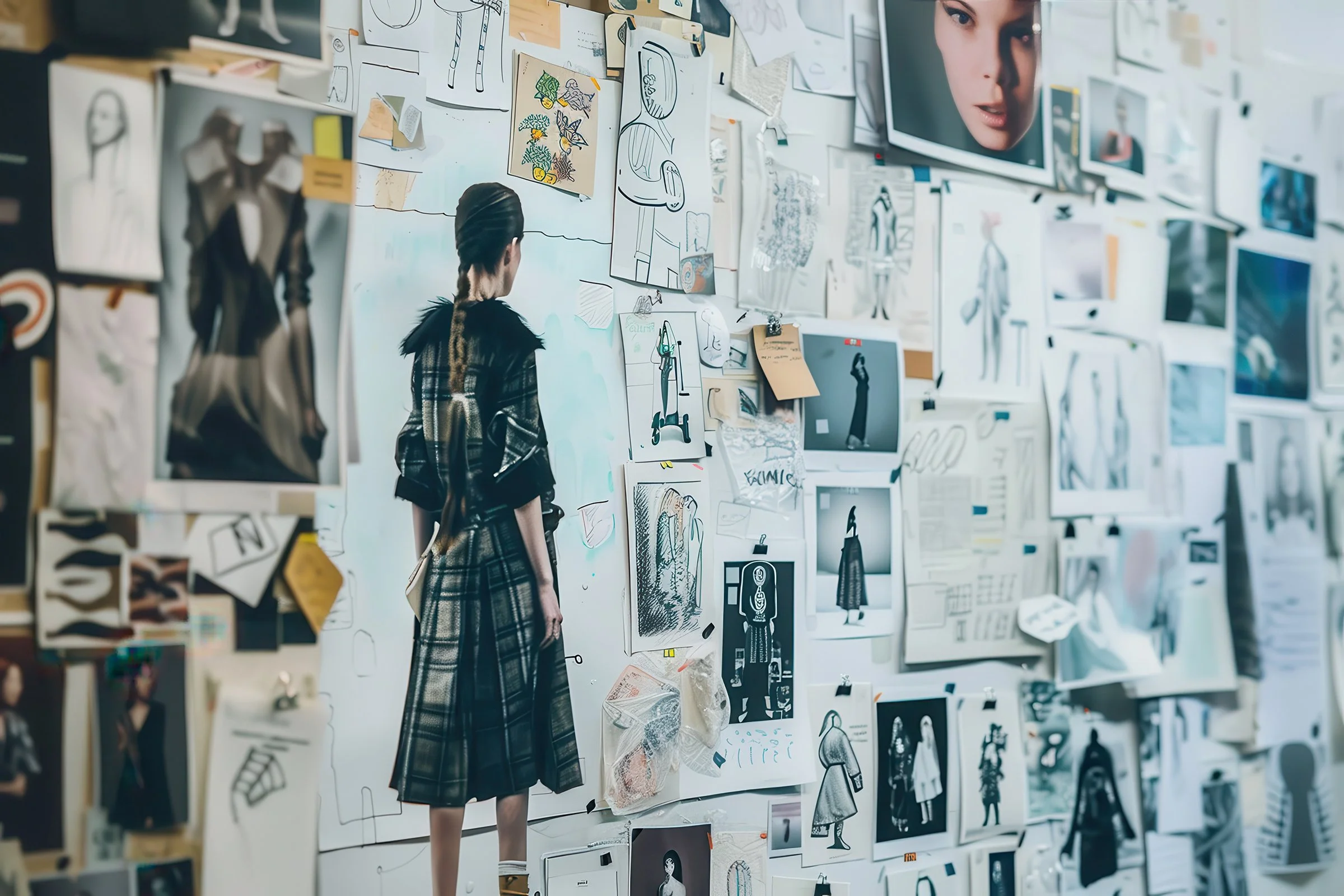
I’m not gonna lie, communicating your design vision is easily one of the most underrated skills that all fashion designers should have. You could be a fantastic artist, an amazing stylist, a grand visionary, but if you are not able to put into words and visuals what you need, the fashion industry is going to feel a lot harder.
For those of you who are already in the thick of it and producing your line, you know what a challenge this can be if someone is just not “getting you.” Maybe this is something you struggle with. A key symptom of this is not getting the results you want from the people that you work with.
Now I know what you are thinking- “I just can’t sketch”. I’m not an artist like that.” But the secret is…you don’t have to be!
Regardless of where you are in your journey I’m going to give you a little behind the scenes action on what really works best. As a pattern maker I’ve worked with so many designers over the course of my career. Sometimes I can easily understand what they want from me. Other times it feels a little fuzzy and I’ll resolve myself to figure it out as I go. As someone who is dedicated to helping designers bring their vision to life, I only want 100% success for you. But my caveat is that the work I can provide is only as good as the information I am given and the feedback I receive. I’m just a pattern maker. But I know your sample maker, your graphic designer, even your manufacturer, all feel the same way.
Let’s dive in and discuss the best way to communicate your design vision.
Any sketch will do
Let’s forget your artistic skill level. You don’t have to be a trained artist. Yes, I know you feel self conscious about how well or poorly you draw, but truth be told, whoever you work with is not assessing the merits of pencil vs ink and evaluating your sketch whether it is worthy or not. Nope, instead, your sketch is being evaluated in terms of intent, proportions and style. In other words, what can I make from this starting point?
Instead of getting caught up in the quality of the sketch and presentation, think of a sketch as part of improv where you set the tone and others that are working with you, take your idea and run with it, making it even better. Anyone who works on your project wants to deliver what you envision. However, there still is an element of each individual adding their own unique touch through interpretation.
I would recommend using croquis, which are essentially simplified human bodies already drawn out. From here you can draw your design on top of their template body.
Let’s say that you want to make dresses (evening gowns) and you only provide verbal instructions. Your pattern maker, for instance, may interpret it as a casual dress. Having a sketch sets the tone on what a project is intended to be.
For those of you who are legit artists, your sketches will no doubt be works of art and impressive to look at. I applaud your skills and am always in awe. However, sometimes when a sketch is too artistic, it leaves a little too much open for interpretation.
I worked with a very famous designer who was, and still is, an amazing artist. His product sketches were museum worthy. However, when it came down to my part in making the pattern, I still had a lot of questions like “how will they get into this? Or “what does the back look like?’
The point is that regardless of your skill level, simple sketches are always a safe bet.
Supporting images
As a pattern maker, I love nothing better than images that help portray the energy and vibe fashion designers are going for. If you feel that your simple sketch doesn’t communicate exactly what your intentions are, this is where supporting images come into play.
Supporting images are anything that comes from an external source like a magazine or website link.
I already know that you are probably feeling worried that this is essentially copying someone else. Let me put your worries aside- you are totally fine and you have nothing to worry about. First of all, even if you are referencing a style exactly, your own product will always be different and usually evolves.
Having supporting images to reference helps to pull complex ideas together. Let’s say you want to make a pair of barrel jeans. Barrel jeans come in all different varieties of volume and shape. Sometimes the best way to communicate what you want is by showing images of something that already exists so you don’t unexpectedly get back a jean where two people can take up residence in a single leg, vs the slight curve that you envisioned.
Having a sort of mood board of supporting images also gives the people that you will work with license to pull together what they know that you like and make it into something workable for production that aligns with your vision.
Original garments
If you have a garment that you absolutely love the fit of, there is nothing wrong with trying to replicate it. In fact, it can be extremely helpful because not only does it communicate your vision, but it also speaks to the fit you are going for.
Let’s say that you have a t-shirt that you want to reference. This t-shirt does not need to be an exact replica of what you want. Instead you can say that you want to use this t-shirt as the overall fit initiative, but you want a cropped version of it with a long sleeve. Maybe you want to change the neck shape. Overall, the fit of the body is what you want to maintain.
This is another one where you have to put aside your fears of copying. Even if you are copying exactly it’s never going to be an exact duplicate unless you are using the same pattern it was made from and the same fabric ( more than likely, you are not). Everyone who touches your project and all the elements that go into the clothing item add their own take.
Measurements
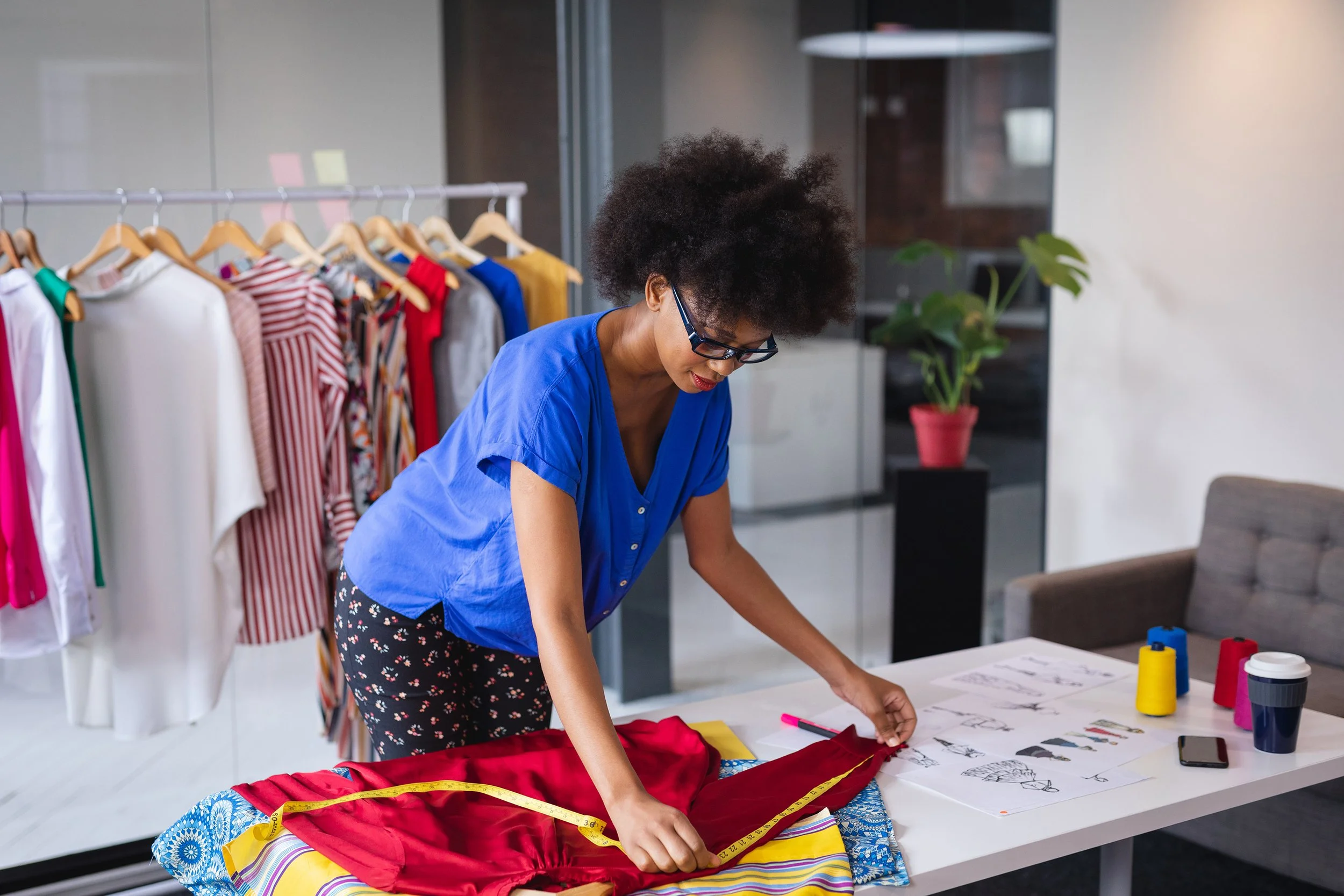
This doesn't require you to be a technical designer who deals with clothing measurements all day. Nor does it require you to have specialized training. All you need is a tape measure!
If you have a specific skirt length in mind or want your blouse to be a certain body length, the best way to communicate this is to give some measurements guidelines. Sometimes these measurements are also key for other design considerations as it gives a sense of proportion. Don’t worry about figuring out all the details. The measurements that you should be providing are for anything that is very design specific. For instance, a 3/4 sleeve. For some this means at the elbow, for others it can mean between the wrist and elbow. If you want to make sure your pattern comes back correctly then be specific with the sleeve length measurement.
Let’s say that you are working with a print designer and you want to develop a paisley print for your line. You could already have some basic elements sketched out or a reference image. In this case it would be helpful to provide a reference for the scale you want by using measurements otherwise your print designer could be envisioning a tiny delicate paisley print, but you wanted something larger than life.
Using measurements is always a solid bet that you will get closer to what you envision.
Fabric
Fabric is key to any design. Everything will be built around the fabric to achieve what you envision. Don’t put fabric to the side as a detail. Even if you know absolutely nothing about fabric, I’m pretty sure that you do know what you like and don’t like.
If you are at the beginning of your fabric sourcing journey you can easily feel overwhelmed by all the options and not really knowing where to start. I don’t blame you! But let’s get your baselines in order first. Take the time to really think about the fabric that you want for your clothing. Fabric is very tactile so having something that you can use to demonstrate exactly what you are looking for is key. Be prepared with garments or actual fabric swatches that you can bring along to sourcing events or fabric vendors to demonstrate what you are looking for.
A common misconception is if you know the fabric content, everyone will know what you are looking for. Unfortunately it’s not this simple. Fabric is defined by a myriad of descriptors such as knit or weave type, fiber content, weight and the treatments applied to it, to name a few. There are just so many variables that can be at play. So always have your reference swatches or garments handy.
Colors
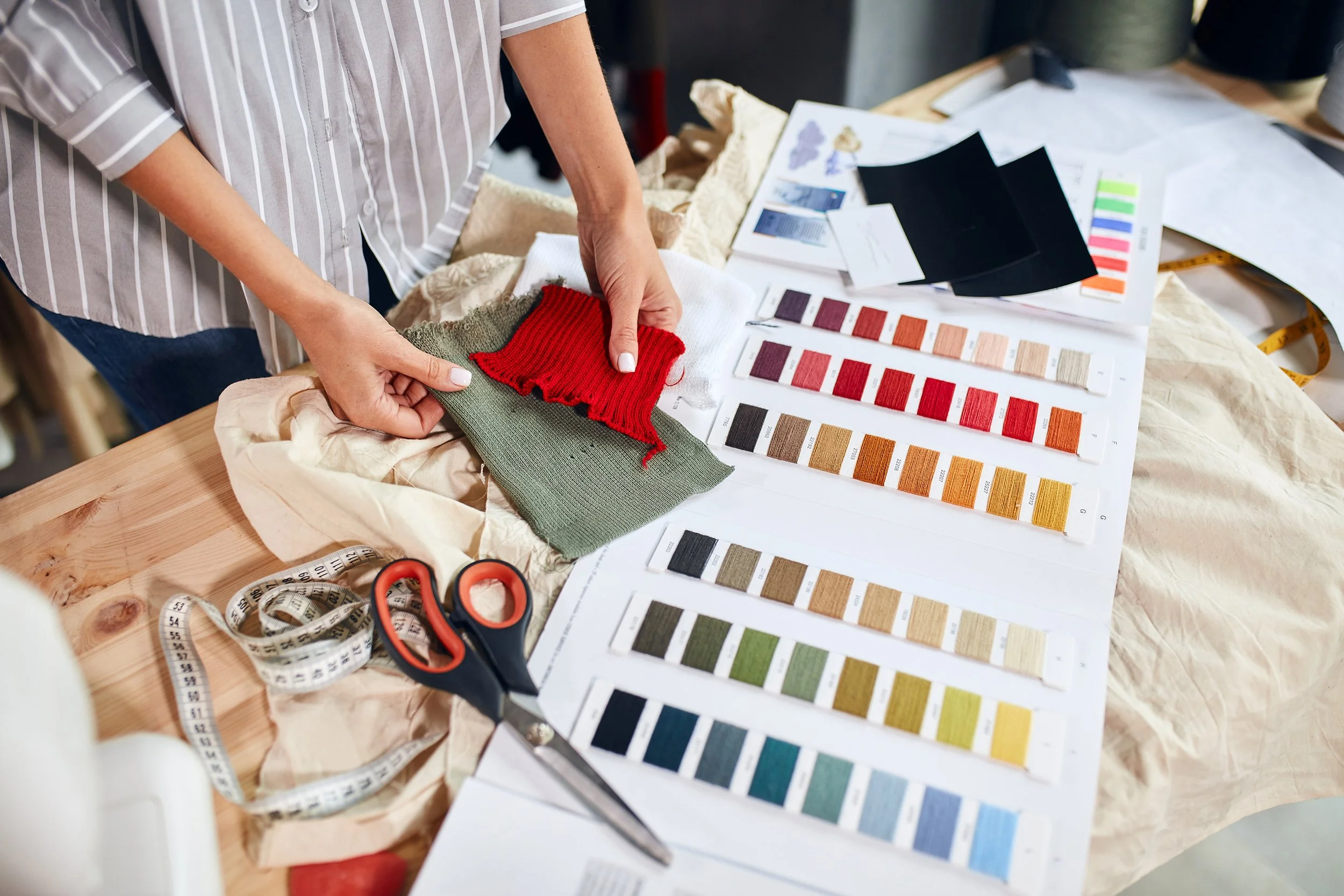
If you’ve ever perused the paint chip section of any hardware store you know how overwhelmingly specific you can get with colors. Just look at how many shades of white there are! Colors are very personal and very brand specific.
I’m an old movie buff and one of my favorites is Mr. Blandings Builds His Dream House. In one of the scenes Myrna Loy's character is walking the painters through the house giving incredibly thoughtful descriptions of exactly what colors she wants. Granted, she does provide guidelines and references. But at the end the painters just generalize the colors. Just watch it!- it’s only 2 minutes.
Putting together a mood board for color can be helpful and it will also keep color schemes on track for your entire collection. The best way to communicate color is by using Pantone codes which are universal standards for colors. For example, I can plug in a Pantone # into Adobe Illustrator and get exactly the same. Pantone products can be pricey, but well worth it for consistency and communication of color throughout the life of your brand. But you can also keep it simple and have decent sized collected swatches to reference.
Let’s make sure you have everything you need to communicate your design vision
I know this is a lot of information to take in and collect. Communicating your design vision is not a one hour process and then you are done (if only!). Instead, if you want to be thorough and make sure you have everything that you need, it’s going to take a minute.
I’ve put together the Pre-Pattern making Checklist for you to reference to make sure that you have everything that you need to work with a pattern maker– or a tech pack designer as well. Pattern making and tech pack development are basically the starting points for your projects, so make sure you know what you need so you can show up prepared!